
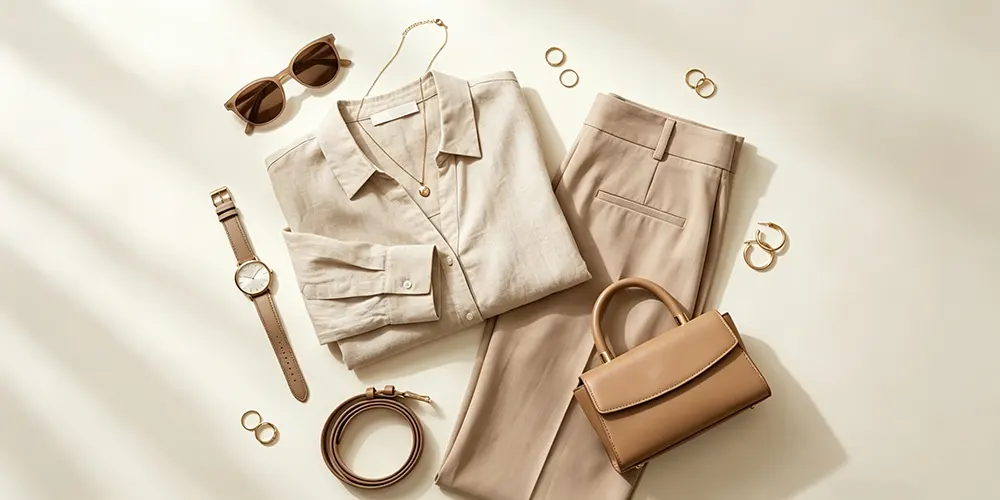
Knowing how to choose accessories for an outfit can make getting dressed much easier. The right bag, shoes, watch, belt, or jewelry can bring a simple look together. But too many accessories can make an outfit feel busy.
A good rule is simple: choose accessories based on the outfit, the occasion, and what you want to highlight. You do not need many pieces. You just need the right ones.
Start With the Outfit
Before choosing accessories, look at the clothes you are wearing. Check the color, shape, fabric, and overall style.
If your outfit is simple, accessories can add more interest. For example, a white shirt with black trousers works well with a leather belt, a structured handbag, and a simple watch.
If your clothes already have bold prints, bright colors, or strong details, keep the accessories more simple. A small bag and understated jewelry may be enough.
This is one of the easiest ways to choose accessories without making the outfit look overdone.
Match Accessories to the Occasion
The best accessories also depend on where you are going.
For Everyday Outfits
For casual days, focus on comfort and easy-to-use pieces. Sneakers, crossbody bags, simple watches, caps, and small earrings can work well with jeans, T-shirts, shirts, and casual dresses.
For example, a neutral crossbody bag can make a basic jeans-and-shirt outfit look more complete without feeling too dressed up.
For Work
Work outfits usually look better with clean and practical accessories. A leather tote, loafers, a classic watch, and a simple belt are easy choices.
Choose pieces that fit the style of your clothes rather than competing with them. A structured bag can also make a relaxed office outfit look more polished.
For Special Events
For dinner, parties, or formal events, you can use accessories to add a little more personality. A clutch, statement earrings, a dress watch, or elegant heels can change the feel of a simple dress.
The key is balance. If you choose large statement earrings, you may not need a bold necklace as well.
Think About Color
Color is another important part of choosing accessories for an outfit.
Neutral accessories such as black, brown, beige, white, and metallic tones are easy to wear with many clothes. They are useful if you want pieces that work across different outfits.
You can also use accessories to add one strong color. For example, a red handbag can add life to an outfit made up of black, white, or gray clothing.
When wearing several accessories, they do not always need to be the exact same color. However, they should look like they belong together.
Balance Size and Detail
Proportion matters too. A large handbag may work well with a long coat or loose trousers, while a small shoulder bag may look better with a fitted dress.
The same idea applies to jewelry. A chunky bracelet can be the main detail of an outfit, while small rings and earrings can stay in the background.
Try not to make every accessory the star.
Choose Accessories That Fit Your Style
Trends can be fun, but personal style matters more. If you usually wear classic clothes, a simple leather handbag or metal watch may feel more natural than a highly unusual trend piece.
Looking at different outfit combinations can also help you understand which accessories work well together. Fashion inspiration platforms such as Brands-hub.ru can be useful when you want to explore different clothing styles, accessory combinations, and everyday outfit ideas.
When learning how to choose accessories for an outfit, start with items you will actually use. A few versatile bags, shoes, belts, watches, and jewelry pieces can create many different looks.
Final Tip
The easiest way to choose accessories is to ask three questions: Where am I going? What is the main focus of my outfit? What does the outfit still need?
Once you answer these questions, choosing accessories becomes much simpler. The goal is not to add more. It is to choose pieces that make the whole outfit feel balanced, useful, and personal.