
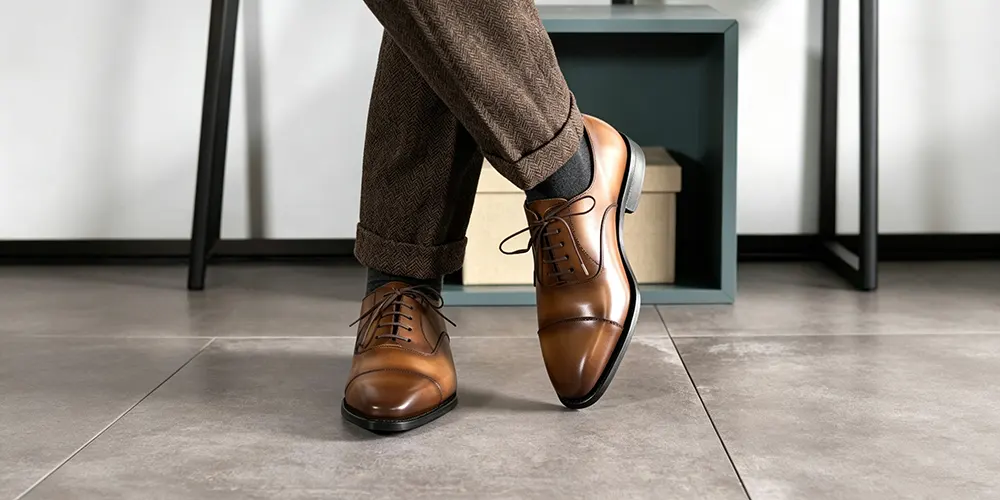
Dress shoes can look great, but that does not mean they feel great. A pair that looks perfect in the store may start hurting after a few hours. If you spend a lot of time walking, standing, or working in formal shoes, comfort should be part of your decision from the start.
So, how do you choose comfortable dress shoes? Look at the fit, toe shape, sole, material, heel height, and overall support. A good dress shoe should feel secure without squeezing your feet.
What Makes Dress Shoes Comfortable?
The most comfortable dress shoes usually have three things in common: a good fit, enough support, and some room for your toes.
Your heel should stay in place when you walk, but it should not feel tightly locked in. The widest part of your foot should fit comfortably inside the shoe. Your toes should also be able to move a little.
For example, if your toes touch the front when you walk, the shoe is probably too short. If your foot slides forward with every step, it may be too loose.
Comfort is not only about softness. A very soft shoe can still cause foot pain if the shape does not match your foot.
How Should Dress Shoes Fit?
Fit is probably the most important part when choosing comfortable dress shoes.
Try shoes later in the day if possible. Feet often become slightly larger after walking and standing for several hours. Wear the type of socks you normally use with dress shoes.
Pay attention to these areas:
- Toe box: Your toes should not feel pressed together.
- Heel: Your heel should not lift too much when walking.
- Width: The shoe should not squeeze the sides of your feet.
- Length: Leave a small amount of space between your longest toe and the front of the shoe.
Do not buy a pair just because the size number is familiar. Different brands and shoe styles can fit very differently.
Which Dress Shoe Style Is Most Comfortable?
Some styles are easier to wear for long periods than others.
Loafers are a practical choice for everyday office wear because they are easy to put on and usually have a lower heel.
Derby shoes can also be comfortable because their open lacing often gives the foot more room to adjust.
Oxford shoes have a more formal look, making them useful for business meetings and events. However, their closed lacing can feel less flexible if you need extra room.
For long days, look for a pair with a cushioned insole and a flexible sole. A moderate heel is usually easier to walk in than a high heel.
Does Shoe Material Affect Comfort?
Yes. Material can make a noticeable difference.
Leather dress shoes can become more comfortable as they soften and adapt to your feet. Suede can also feel flexible, although it needs more care.
The inside of the shoe matters too. A smooth lining and breathable material can help reduce rubbing and discomfort.
How Can You Test Dress Shoes Before Buying?
Walk around in both shoes for several minutes. Do not only stand in front of a mirror.
Try walking on a hard floor and check for pressure around your toes, heel, and the sides of your feet. Bend your feet naturally and see if the sole allows some movement.
If the shoes already hurt in the store, do not assume they will magically become comfortable later.
Final Tips for Choosing Comfortable Dress Shoes
The best comfortable dress shoes are not necessarily the softest or most expensive. They are the ones that match your foot shape and support the way you actually walk.
Check the fit first, then consider the toe shape, sole, material, and heel. If you need dress shoes for long workdays, choose comfort over a slightly more fashionable shape. Your feet will probably thank you by the end of the day.